FORUM – Nancy K. Florida's History as Prophecy
A Historiographical Legacy
History and Theory 65, no. 3 (2026)
Forum Contents:
Nancy Florida – INTRODUCTION: REFLECTIONS ON HISTORY AS PROPHECY, CONTINUING THE CONVERSATION
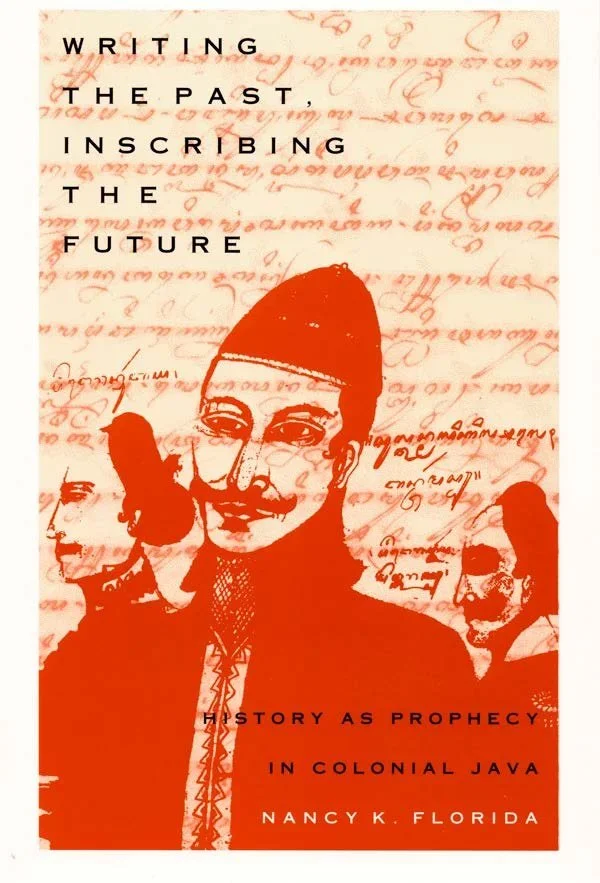
In this essay, I provide brief introductions to the notion of “prophetic” historiography that I developed in Writing the Past, Inscribing the Future: History as Prophecy in Colonial Java (1995) and to the five essays of this forum that were written in dialogue with it. I argue that “history as prophecy” forms a practice of writing in which the “prophetic historian” seizes hold of a moment of past potency to self-consciously reinscribe it in the historian's present so that it may become a context for action in the futures of its readers. In my book, that argument is developed by means of a deeply textured reading of a unique nineteenth-century narrative history of Java's fifteenth-century transition to Islam, a nearly seven-thousand-line poetic history that was written by a royal exile. Each of the five essays engages my notion of “history as prophecy” in conversation, extending it into other realms of historical expression. The subjects of these five essays include contemporary performance cultures in Indonesia, an Arabic-language Islamic history of the Indonesian past, genealogical practices of Acehnese Sufis, and Indonesian literary history.Karen Strassler – ASSEMBLING PASTS, PROJECTING FUTURES: READING TINTIN WULIA'S A THOUSAND AND ONE MARTIAN NIGHTS WITH NANCY FLORIDA'S WRITING THE PAST, INSCRIBING THE FUTURE
In Writing the Past, Inscribing the Future: History as Prophecy in Colonial Java, Nancy K. Florida identified a form of Javanese historical writing in which telling the past is a political act, one oriented to envisioning possible futures. This essay examines an experimental video by the artist Tintin Wulia that resonates with this prophetic form of history. Wulia's video, A Thousand and One Martian Nights, blends documentary and science fiction to tell the stories of political prisoners sent to the island of Buru as if they were exiles cast away to Mars in 2065. Footage from the United States’ space program in 1965 contributes to the futuristic tone while setting the decimation of the Indonesian leftist movement within the context of US imperialism. This layered video unsettles the conventions of historical evidence and linear narrative, eschewing conventional documentary forms that the New Order regime appropriated for state propaganda. Wulia's collaged historical text challenges the evidentiary claims that underpin conventional historiography and reimagines the past to open paths toward more just futures. By staging an unlikely dialogue between Wulia's video and Florida's reading of the Babad Jaka Tingkir, this essay aims to extend the efficacy of Florida's text. It argues that, however profoundly engaged it is with a specific literary tradition and historical context, Florida's text offers us generative ways to think broadly about the politics and potentials of history-writing in contexts of political suppression.Ismail Fajrie Alatas – NOT QUITE A PROPHET FACING BACKWARD: ON HISTORY AS EXTENSION OF PROPHECY
This essay develops the concept of history-as-extension-of-prophecy, a mode of historiographical reasoning that unsettles the dominant modern opposition between tradition as temporal continuity and revolution as temporal rupture. Through a close reading of Aḥmad b. ʿAbdallāh al-Saqqāf's (1882–1950) Tārikh Sulṭanat Bāntan al-Islamiyya, a mid-twentieth-century Arabic history of the Islamic Sultanate of Banten (West Java), I show how prophetic temporality operates as a form of historical extension, linking past, present, and future through an inherited script whose fulfillment remains open, deferred, and actionable. Drawing on Nancy K. Florida's account of Javanese “history-as-prophecy,” I demonstrate that al-Saqqāf mobilized prophecy not as eschatological closure or antiquarian devotion but as a historiographic method that renders time morally legible and political generative. Through the concept of miṣdāq (extension), al-Saqqāf aligned dispersed episodes of anticolonial resistance and Islamic revival with a prophetic ḥadīth about a continuously “victorious group,” thus reframing Indonesian history as an unfolding exegesis of Muḥammadan truth. I propose that history-as-extension-of-prophecy illuminates a distinctive temporal politics, one that carries inherited promises forward while activating unrealized possibilities in the present. It neither binds political life to a fixed past nor surrenders it to revolutionary novelty. Instead, it mediates continuity and interruption by treating disparate events as links in an open prophetic arc. The essay thus positions prophetic historiography as a critical resource for thinking moral legibility, historical responsibility, and alternative futurities beyond the tradition/revolution binary.Daniel Andrew Birchok – “TO SEUNAGAN SEEKING HAS SPREAD”: THE TRANSMISSION OF ESOTERIC TRADITION AND HISTORY AS PROPHECY
In this essay, I explore accusations of heterodoxy, as well as rebuttals of these accusations, leveled at Sufi groups in late-colonial and independent Aceh, the last region of what is today Indonesia to fall under Dutch colonial rule. What has been at stake in debates about the orthodoxy of such groups has not simply, or even primarily, been questions of proper belief or practice but concerns over historical and interpersonal relationships among participants in esoteric traditions. Following Nancy K. Florida's attentiveness to the ways in which “prophetic history” entails engagements with the past that entwine people across temporalities, I argue that accounts contesting the alleged heterodoxy of esoteric traditions in Aceh have been infused with an emphasis on seeking active and ongoing relationships across time and space, a mode that I identify as an intercessionary form of prophetic history. The proponents and detractors of any particular tradition make their claims not simply by referencing authoritative precedents but by cultivating relationships with those who populate the pasts that they invoke. This reframes orthodoxy as an ethical act of prophetic historiography.In her discussion of two episodes in the Babad Jaka Tingkir, a little-known and incomplete nineteenth-century Javanese narrative poem that is part genealogical history and part fictional romance, Nancy Florida asserted that these episodes, which are the two most “novelistic” episodes in the Jaka Tingkir “history,” hint at a new kind of historical writing. In this essay, I begin by interrogating what Florida meant when she called the Babad Jaka Tingkir “a historical prophecy” and then consider whether Student Hidjo (A Student Named Hijo), a 1918 novel written in Malay prose by a Javanese journalist and novelist, Marco Kartodikromo (1890–1932), can be interpreted as a fictional representation of what Florida termed “a new historiographic project” rather than as merely an interesting literary echo of a Javanese “history” written fifty years earlier in colonial Java.
Els Bogaerts – JAKA TINGKIR: ANCESTOR, KING, SAINT—FRAMING A JAVANESE HERO IN A POPULAR SONG
As Nancy K. Florida stated in Writing the Past, Inscribing the Future: History as Prophecy in Colonial Java, in the more dominant historical traditions, Jaka Tingkir is recalled as the founder of the Central Javanese kingdom of Pajang, an ascetic, an exile, and a brave warrior. Well-known from chronicles such as babad texts and other storytelling genres, the figure of Jaka Tingkir has inspired artists to reinterpret his appearance and role in their own creations. In this essay, I discuss an early twenty-first-century song that, in part due to its reference to Jaka Tingkir, became wildly popular and extremely controversial. Focusing on dialogic encounters (a key concept in Florida's work), I explore how, in their responses to this song, religious leaders not only reiterated historical narratives and cultural practices but also put these into new contexts, creating new pasts while envisioning future aspirations.