
Synchronizing History
Network
About
The Synchronizing History Network (SHN) promotes inquiries into the conditions of possibility for practicing history in the globalized world of the twenty-first century. Many endeavors to write global or world histories pursued in the last thirty years have been criticized for their Eurocentrism and ethnocentrism; though more sophisticated epistemologically and methodologically, most of them have been mere prosecutions of nineteenth-century European philosophies of history. However, to overcome ethnocentrism, or even to delink other cultures from European culture, is much easier to state or to assume than to practice. One of the best examples in this direction is the important book by Dipesh Chakarbarty, Provincializing Europe, which testifies to how profound the process of imbrication of European culture in the Indian everyday life and, by extension, in the rest of the world has been. Chakrabarty’s book is a cautionary tale about attempting to come to terms with European culture and its philosophies of history, before trying to overcome it and to find different possibilities to write history.
Too often, the historical narratives and worldview that one receives in their place/country are unreflectively extended to the rest of the world. We must learn to see outside our common narrative and begin to synchronize the different visions of the world, starting from the necessity to deconstruct/reconstruct the synchronistic and synchronizing methods developed in Europe in the previous centuries and, at the same time, from the need to be extremely aware of the processes of synchronization implied by the European expansion in the world. This does not mean dismissing the Western culture or rejecting the idea of History formed in Europe entirely, but it does mean demoting it and embracing theoretical strategies to make room for alternative forms of thinking many of which have been left outside of the traditional conceptions of history and time, but are more appropriate for the needs of a globalized world. The SHN aims not so much to provide other forms of world history or global history but rather to discuss how different conceptions of history and different conceptions of temporality can be placed in dialogue and synchronized in a common history.
In this context, the recently expanded concept of translation is of crucial importance. Translation is the means through which different cultures and different methods encounter, synchronizing themselves. In Koselleckian terms, we should ask ourselves how it is possible to synchronize the nonsynchronous, taking into account the unavoidable ethnocentrism of any reconstruction. This is, methodologically and epistemologically, the reason why the SHN delves into the possibility of imagining other forms of History outside of and beyond the European tradition. Thinking of the possibility of an Outside is not enough to change perspectives and approaches but requires a raising of the level of abstraction and an in-depth reconsideration of the object of analysis. Indeed, in our case, it is not enough to reconsider the concept of History as developed in Europe between the nineteenth and twentieth centuries. What is needed is an openness to the possibility of thinking in different ways about the relationship between past, present, and future, considering how this relationship has been thought in different cultures and how these different historical cultures can be synchronized or placed in dialogue in order to foreclose misunderstandings, closures, and dominations. To pursue this goal, we need to move the object of analysis from traditional issues to new ones.
The recent debates on deep or big History and on the concept of the Anthropocene are undoubtedly among the most significant examples of the issues and questions raised by a reconsideration of the relationships between past, present, and future—that is, by a move beyond the European historiographical tradition based on states and nations. It is no coincidence that they have been placed within another, equally important debate (of which they are themselves a part) on regimes of historicity and the difficult relationship between natural times and human times. The SHN promotes a deeper analysis of what has been called the new metaphysics of time and a reconsideration of the different conceptions of temporality and periodization in relation to the historical method. Ultimately, the SHN aims to be the place in time where all the above-mentioned instances meet, where different disciplines and different visions of the world can find a common field of inquiry to fertilize ideas and projects for a common planet and for a new history.
Synchronizing History Conferences
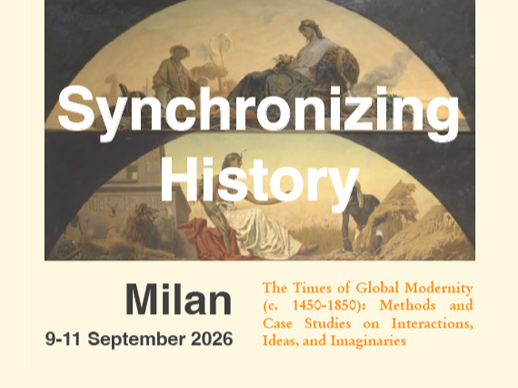
THE TIMES OF GLOBAL MODERNITY (C. 1450-1850): METHODS AND CASE STUDIES ON INTERACTIONS, IDEAS, AND IMAGINARIES
9–11 September 2026 • Milan, Italy
The third meeting of our project broadens its scope to encompass Early Globalization more fully, including its revolutionary and imperial reconfigurations. It adopts a periodization that extends from the late Middle Ages to the transition to the contemporary era. By welcoming scholars working on world interactions across these centuries, the Milan conference will build on the outcomes of the first two meetings and expand the network of researchers pursuing historical inquiry through both entangled and comparative approaches, and across micro- and macro-level contexts.
Learn more
THE TRANSPLANTATION OF AMERICAN IDEAS IN EUROPE
17–19 September 2025 • Rio de Janiero, Brazil
The second Synchronizing History conference explored the transplantation of American ideas in Europe in order to give a proper idea of the impact of new ways of thinking about Global History from less Eurocentric perspectives that take into account the need to overcome unilinear conceptions of time and open space for approaches that consider different ‘visions’ of history and their distinct temporalities.
Learn more
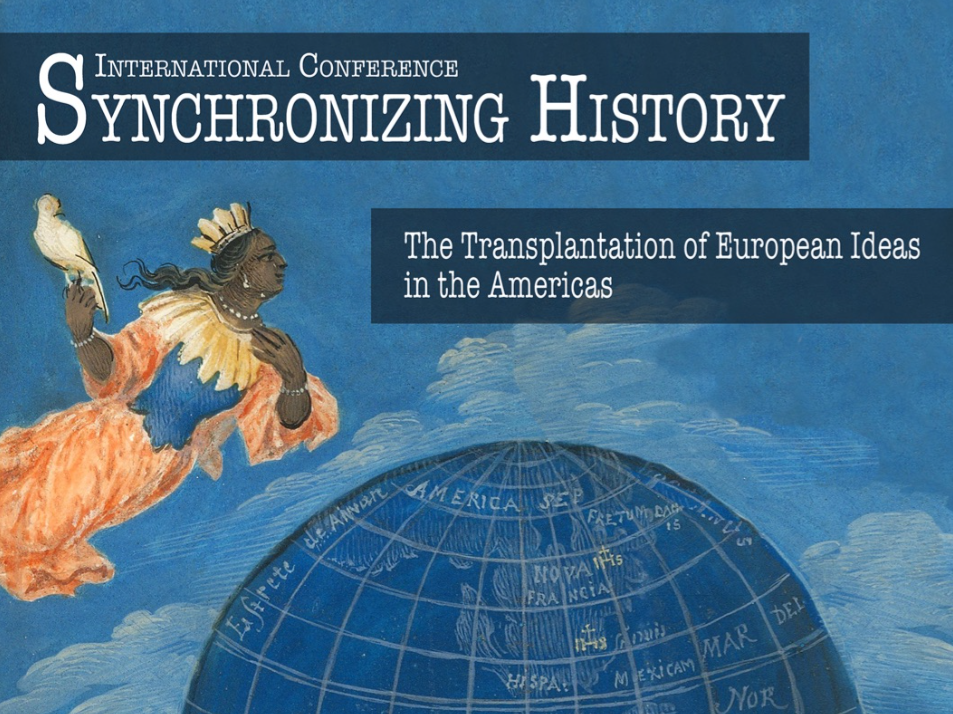
THE TRANSPLANTATION OF EUROPEAN IDEAS IN THE AMERICAS
18-21 September 2024 • Palermo, Italy
The first Synchronizing History conference shed light on the vast transplantation of European ideas in the Americas, paying particular attention to the methodological and theoretical aspects inherent in any analysis of this complex cultural movement. The conference’s organizers aimed to create a space in which historians and translation scholars can meet themselves in fruitful ways; the conference was designed to be a place for the creation of new approaches to history and translation or even, as recently argued, to history as translation. Indeed, historians and translators were invited to refine their methods and to intertwine their respective approaches with the aim of reaching a new and more comprehensive knowledge of the process which led to the formation of Western history.
Learn more
organizers
Scientific
Committee
Luigi Alonzi, University of Palermo
Helge Jordheim, University of Oslo
Ethan Kleinberg, Wesleyan University
Shahzad Bashir, Aga Khan University
Christophe Bouton, Bordeaux Montaigne University
Stefanos Geroulanos, NYU
Hephzibah Israel, University of Edinburgh
Shonaleeka Kaul, Jawaharlal Nehru University
Alexandra Lianeri, Aristotle University of Thessaloniki
Stefan-Ludwig Hoffmann, UC Berkeley
Federico Marcon, Princeton University
María Inés Mudrovcic, Universidad Nacional del Comahue/CONICET, Argentina
Helio Rebello Cardoso Jr., São Paulo State University (UNESP)
Lisa Regazzoni, Bielefeld University
Zoltán Boldizsár Simon, Lithuanian Institute of History
Marek Tamm, Tallinn University
Alp Eren Topal, Ibn Haldun University
Einar Wigen, University of Oslo
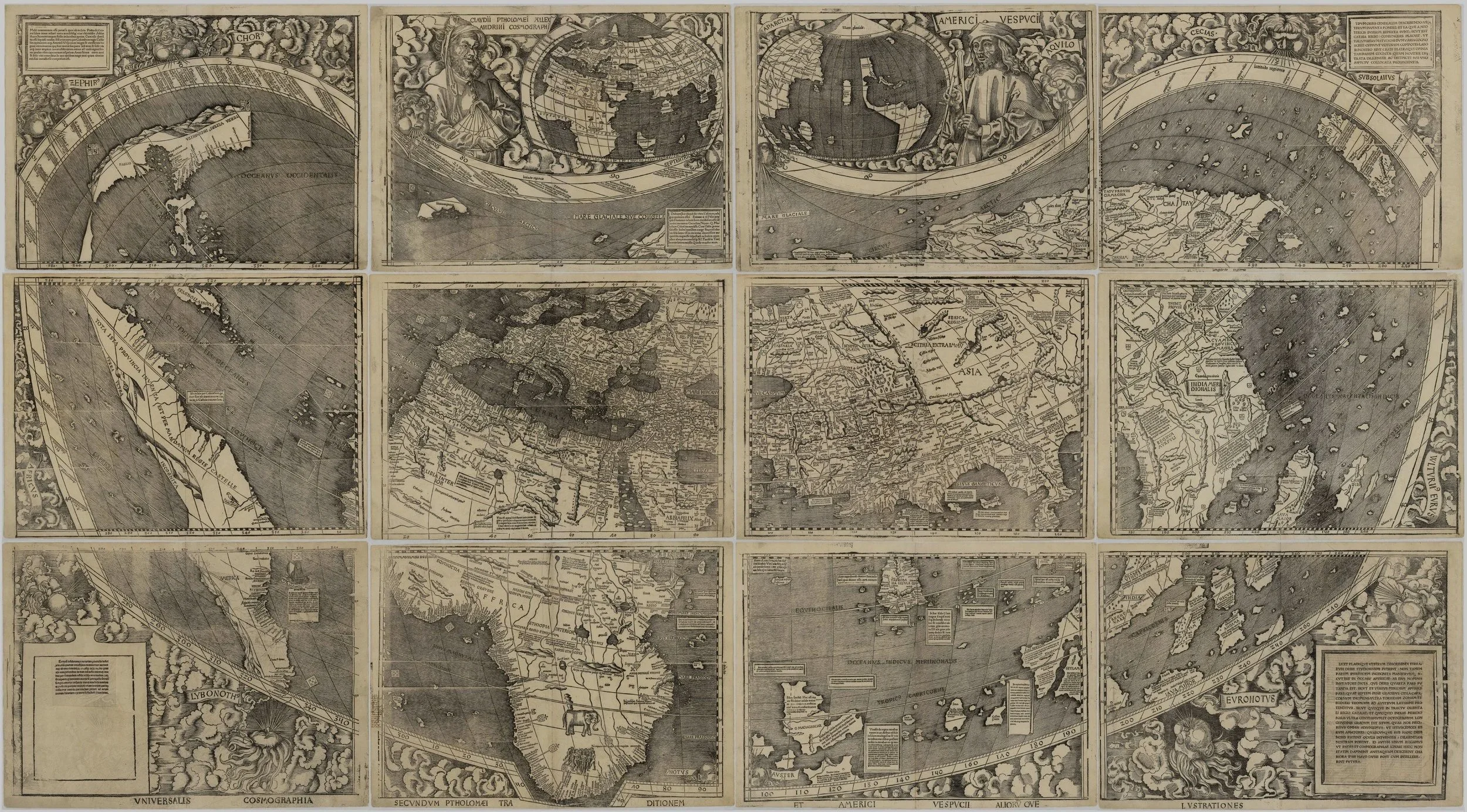
Cover image: https://en.wikipedia.org/wiki/Waldseem%C3%BCller_map